
• Secure computation
• Data in Use Protection
• Runtime Engine
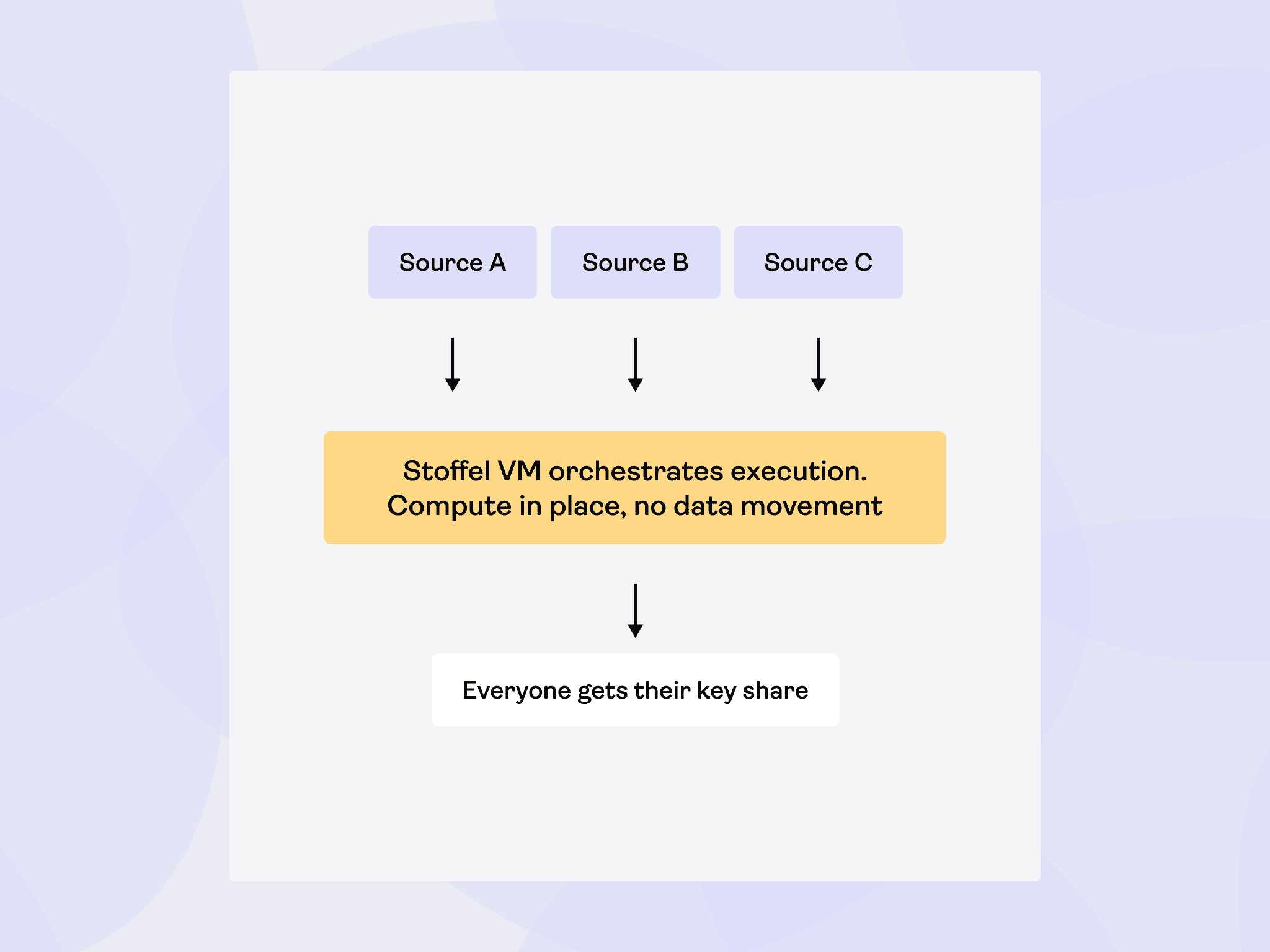
StoffelVM runs `.stflb` bytecode across clear values, shares, client-provided values, and explicit openings
What StoffelVM does
A VM for programs that mix ordinary values with secret shares
Keep private details as shares
Split sensitive user context into shares. Compute without pooling private details.
Approved results only
Open allowed output.
Built for real runs
Register-based architecture with deterministic execution, p50/p95/p99 observability, and protocol-aware scheduling. Designed for systems where performance characteristics need to be auditable, not estimated
Built for builder workflows

Separate clear and secret state
Keep public values clear and sensitive values represented as shares.

Deterministic execution
Same inputs. Same outputs. Easier debugging and review.

Deep observability
Trace the run, inspect latency, and debug the workflow.
How you run it
Write in StoffelLang
Write the logic with public and secret types
Compile to bytecode
Compile to `.stflb` with clear and secret values handled separately
Execute with MPC